

Platform
The CLM for banks
and financial institutions
Gino is an AI-powered CLM platform that gives legal and operational teams complete control over the contract lifecycle.





3 contract management challenges
financial institutions can’t ignore
Customer Story
How a bank with 3,800 employees transformed its contract management
Gino x CADIF : measurable improvements across the entire contract lifecycle.
80%
time saved
-75%
fewer contract errors
+350%
more contracts generated & processed
" We need partners who are agile, dynamic and innovative to support us in digitizing our contracts."

Guillaume de Crémiers
Legal Director CADIF
A platform designed for the demands of banking and finance
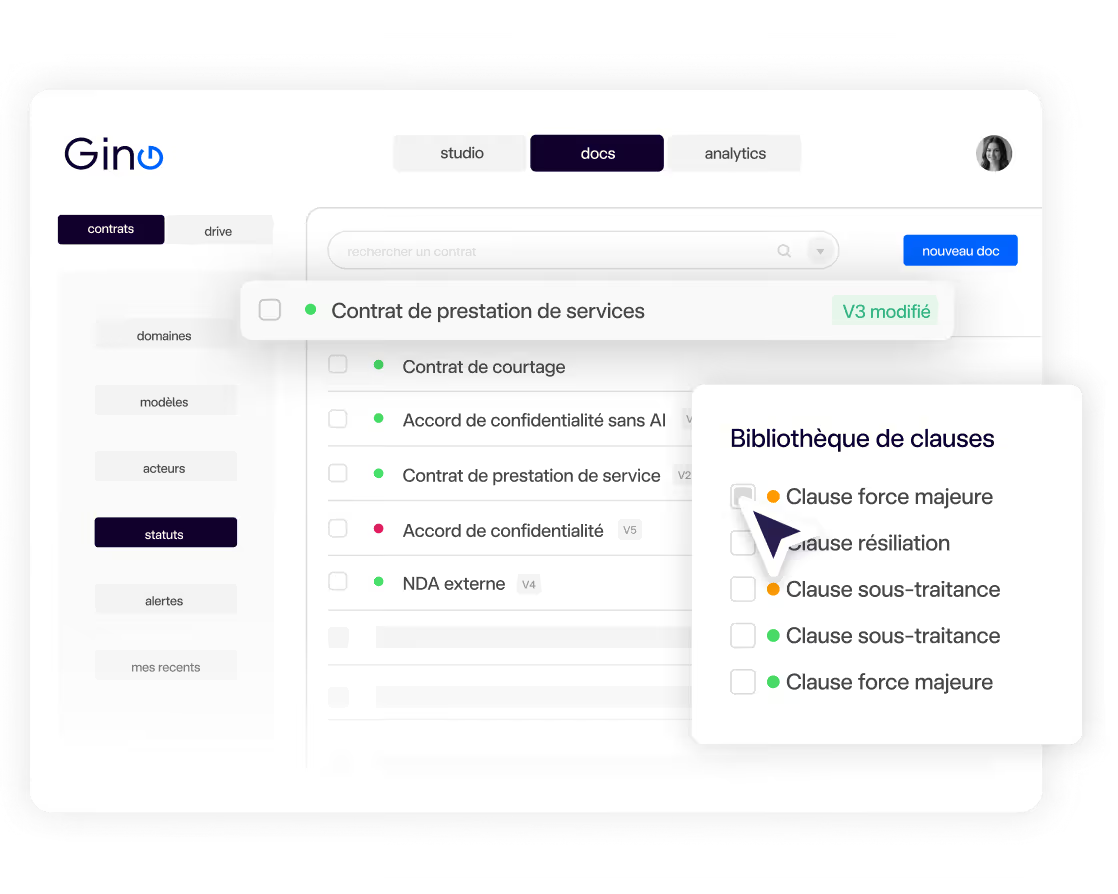
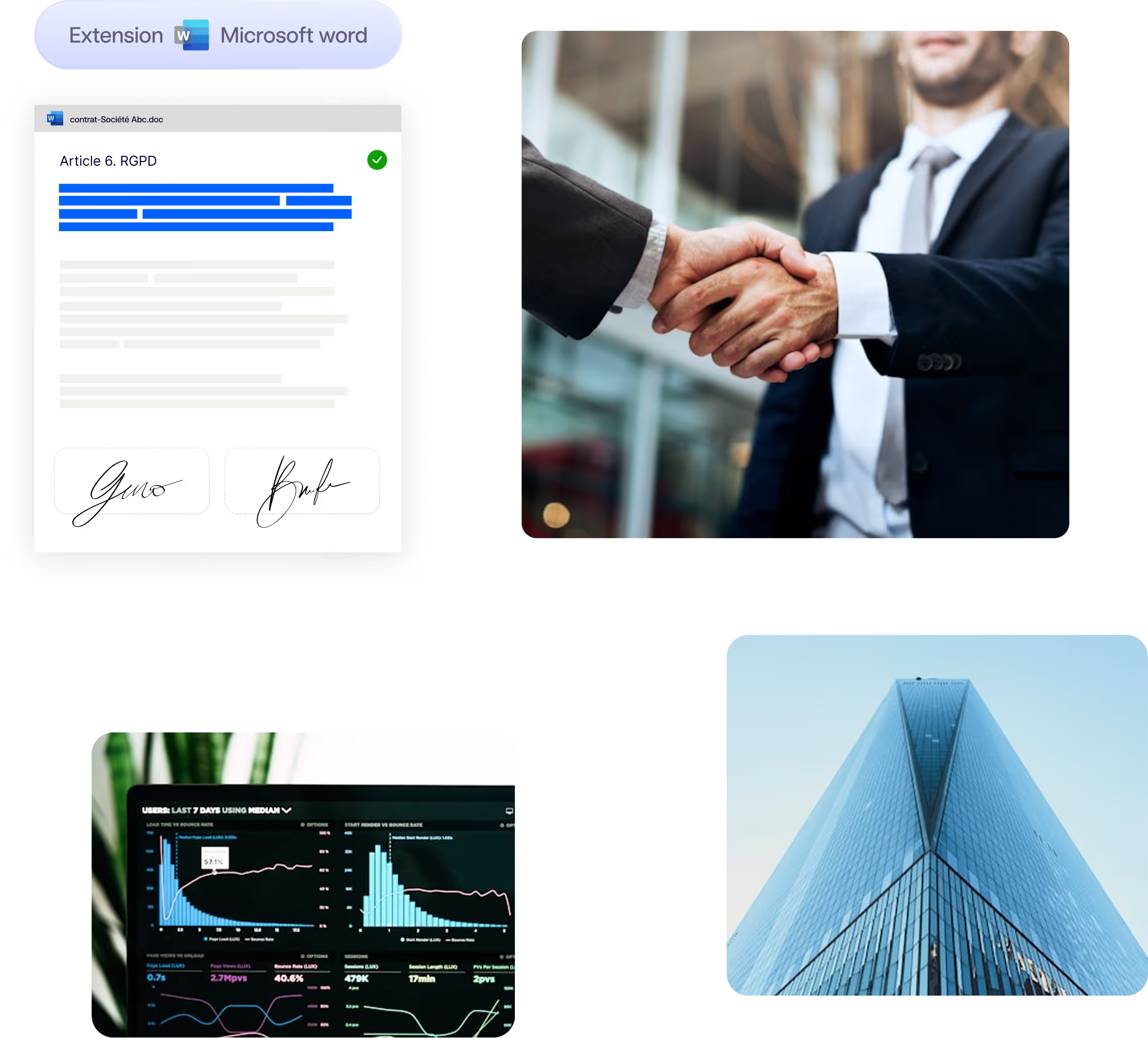
Keep your contract templates up to date
Regulatory changes can impact hundreds of contracts. Gino helps you identify the relevant templates and roll out the right clauses at scale.
- Centralized clause library
- Dynamic contract templates
- Version control and full change history
- Quickly identify contracts impacted by regulatory changes
Secure every step of the approval process
When multiple teams are involved in the same contract, governance can’t rely on email threads or informal approvals.
- Customizable workflows based on contract type
- Approvals routed to the right stakeholders
- Real-time progress tracking
- Complete history of approvals and decisions


Accelerate your due diligences
During an acquisition, divestment or audit, contracts become a critical source of strategic information. But only if you can find and analyze them quickly.
- Centralized contract repository
- Multi-criteria contract search
- Automatic extraction of key data
- AI-powered contract analysis and summaries
Why financial institutions choose Gino












"At Gino, we’re supported by legal professionals, so we work with people who speak the same language as us and understand the challenges behind contract management."

Jean-Michel Chavet
Legal Director CADIF
FAQ

How Can Banks and Financial Institutions Improve Contract Management?
Contract management in a bank goes far beyond drafting and signing contracts. It requires coordination across multiple functions : Legal, Compliance, Risk, Procurement and business teams, while ensuring secure approvals and maintaining a clear view of the organization’s contractual commitments.
Challenges often arise when processes rely on emails, Excel spreadsheets or disconnected tools. A contract management solution helps structure workflows, standardize templates and make it easier to manage contracts at scale.
Why centralize contracts in the banking sector?
In many banks, contracts are spread across multiple systems: document management platforms, shared folders, inboxes and business applications. This fragmentation makes audits, internal controls and due diligence exercises more complex.
When a Compliance Manager needs to identify every contract affected by a new regulatory requirement, or an M&A team needs to assess commitments related to a business portfolio, simply finding the right documents can become the first major obstacle.
Centralizing contracts not only makes documents easier to find, but also provides a consolidated view of the organization’s commitments. It is often the first step from simply storing contracts to actively managing them.
How can you automate contract processes while meeting regulatory requirements?
Contract automation isn’t about removing human oversight. It’s about making processes more structured, reliable and secure.
In a banking environment, every stage of the contract lifecycle needs to be traceable, properly approved and compliant with both internal policies and external regulations. Automation helps standardize contract generation, orchestrate approvals and reduce error-prone manual tasks.
By structuring workflows and embedding business rules, financial institutions can shorten processing times while strengthening compliance. A CLM therefore makes it possible to combine operational efficiency with regulatory requirements without compromising process security.
How can you maintain contract compliance as regulations evolve?
Banks and financial institutions regularly need to update their contracts to reflect new regulatory requirements. Whether it’s DORA, the outsourcing of critical services or other compliance obligations, the first challenge is being able to quickly identify which contracts are affected.
More mature organizations typically rely on clause libraries, standardized templates and a structured approach to contract compliance to reduce the risks associated with outdated documents.
How can you track contractual obligations after signature?
A significant share of contractual risk emerges after signature. Reporting obligations, audit rights, service levels, automatic renewals and regulatory deadlines all need to be monitored over time. Without a dedicated process, obligations can easily be overlooked or addressed too late.
Effective contract obligation tracking makes it possible to assign actions to the right owners, generate alerts and anticipate important deadlines before they become operational risks.
How can you prepare for due diligence more efficiently?
Due diligence isn’t just about gathering documents. Teams also need to identify contracts containing change-of-control clauses, significant financial commitments, supplier dependencies or specific regulatory obligations.
When this information is already structured and easily accessible, analysis becomes faster and more reliable. When contract data is fragmented, timelines increase and so does uncertainty.
What is the difference between a Document Management System and a CLM?
A document management system is primarily designed to store, organize and retrieve documents. A CLM solution covers the entire contract lifecycle: creation, negotiation, approval, signature, obligation tracking and contract data analysis.
In practice, a document management system addresses a document storage need, while a CLM addresses a contract management and governance need.
The ability to structure processes and leverage the information contained within contracts is what fundamentally distinguishes the two approaches.
How can financial institutions reduce contract errors?
Contract errors often result from outdated templates, incomplete approvals or multiple versions circulating simultaneously. These situations can lead to delays, disputes or difficulties during internal and external audits.
To reduce these risks, financial institutions typically seek to standardize templates, structure approval workflows and centralize contract information. The goal is to make processes more reliable while reducing error-prone manual intervention.
How should a bank choose a contract management solution?
Banks should prioritize solutions that can meet their requirements for governance, compliance and traceability.
Beyond features alone, it’s important to assess how well the platform can integrate into the existing technology environment, support multiple teams and make use of contract data.
An effective Contract Lifecycle Management (CLM) solution should provide a sustainable framework for contract processes while adapting to the specific requirements of the financial sector.
Gino, contract management powered by AI
© 2024 Gino Legaltech, all rights reserved

